


 When people start planning a new kitchen, the price difference between custom joinery and flat-pack cabinetry is usually the first thing that stops them in their tracks. Flat-pack looks straightforward on the surface: you can see the price, you can picture the product, and the showroom makes it feel simple. Custom joinery feels less defined, and for many people, that uncertainty is enough to make them default to the cheaper option.
But the question worth asking isn’t just what each option costs. It’s what you’re actually getting, and how long you’re getting it for.
What Flat-Pack Is, and Where It Works
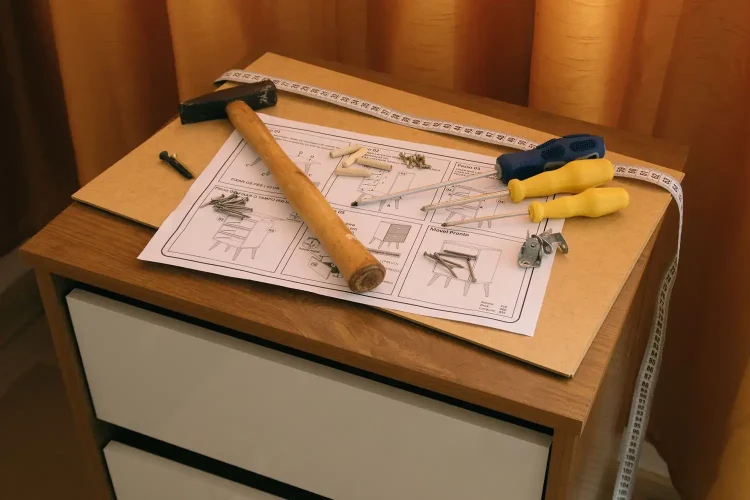
Flat-pack cabinetry is manufactured to standard sizes in a factory, packed into boxes, and assembled on site. The materials are typically particleboard or MDF with a laminate or melamine surface. The hardware (hinges, drawer runners, handles) is functional and designed to be installed quickly.
For some situations, this is perfectly adequate. A rental property, a laundry, a garage workshop, or a room you know you’ll gut again in five years are all places where flat-pack can make practical sense. The cost is lower because the product is standardised, the materials are cheaper, and the labour involved is minimal. If the job is low-stakes and the timeline is short, that trade-off is reasonable.
Where it starts to fall short is in a kitchen you’re planning to live with for twenty or thirty years, in a home with non-standard dimensions, or anywhere the standard sizes simply don’t fit the space.
What Changes With Custom Joinery
With a custom-built kitchen, nothing is pulled from a catalogue. The cabinetry is designed around your specific room, your ceiling height, your wall angles, your appliances, and the way you actually use a kitchen. If your kitchen is 2,340mm wide, the cabinetry is built to 2,340mm, not the closest standard size with a filler strip to hide the gap.
The materials are different too. At Geoff Locke, the work uses solid timber, moisture-resistant MDF, HPL plywood, and laminated veneer lumber: products chosen for durability in a working kitchen rather than for ease of packaging. Benchtops are acrylic. Hardware including hinges, drawer runners, and push-to-open systems is selected to perform reliably over years of daily use, not to hit a price point.
The joinery is made to order in the workshop and finished by hand. Soft-close drawers, premium hinges, and properly fitted doors are standard, not upgrades you add to a base price.
Where the Price Difference Actually Goes
People sometimes assume the price difference between custom and flat-pack is mostly margin. It isn’t. You’re paying for different materials, different skills, and a fundamentally different process.
A custom kitchen involves a qualified tradesperson sitting down with you to understand how you use the space before anything is drawn up. It involves a workshop, proper machinery, and the kind of time and attention that standardised production can’t replicate. It involves installation by the people who built it, who know exactly how each piece is meant to fit.
Geoff Locke is a third-generation cabinetmaker. The craft was passed down through his grandfather and his father Basil before him, a family tradition stretching back over 130 years. That depth of knowledge shapes how the work is done: not just the techniques, but the understanding of what makes a piece last and what cuts corners that will show up later.
When you’re paying for custom joinery, you’re choosing to invest in a professional who will build it once and build it properly.
The Longevity Argument
 This is where the honest comparison tips clearly in favour of custom. Flat-pack cabinetry has a lifespan. The particleboard substrate swells when it gets wet. The laminate surface chips and peels. The drawer runners and hinges wear out. In a busy family kitchen, flat-pack can start looking tired within five to eight years and genuinely worn out well before the fifteen-year mark.
A well-built custom kitchen is a different category of object. Solid timber and quality joinery don’t deteriorate the same way. The hardware is built to last. The cabinet carcasses are structurally sound for decades. There are kitchens built by joiners that are still in daily use after forty or fifty years and still look good.
If you stay in your home for twenty years and replace a flat-pack kitchen twice, the cost comparison changes considerably. And that’s before you account for the disruption, waste, and hassle of doing it again.
When to Choose What
To be straightforward about it: flat-pack has its place, and not everyone needs a custom kitchen. If you’re doing up an investment property, fitting out a laundry or utility room, or working with a very tight short-term budget, flat-pack is a reasonable choice.
But if you’re renovating your own home, one of the most useful questions to ask yourself is how long you’re going to be in the home. If the answer is ten years or more, a custom kitchen is worth taking seriously. The kitchen is the most used room in the house. It’s where daily life happens, meals get made, and people tend to gather. Getting it right once, with joinery that fits the space properly and materials that hold up to real use, is a better outcome than settling for something standard and starting again in a decade.
A kitchen that’s properly built becomes part of the house. It might even become part of the family: the kind of thing that gets mentioned when the house eventually sells, or passed down when it doesn’t.
A Note on Process
One of the other practical differences with custom joinery is what the process looks like. With flat-pack, you pick from what’s available. With Geoff Locke, you start with a conversation about how you cook, how your household works, and what you actually need from the space. The design comes out of that, not from a standard range.
That process takes longer than ordering from a catalogue. But it produces a kitchen that works for the way you live, built to still be working long after a flat-pack alternative would have been taken to the tip.
If you’re planning a new kitchen in Northland and want to talk through what custom joinery could look like for your home, get in touch with Geoff Locke. We’re happy to have an honest conversation about what’s possible, what it involves, and whether it’s the right fit for your project.
