


 A scullery is one of the most practical additions you can make to a kitchen. Done well, it keeps the main kitchen clear, gives you a dedicated space to prep and clean up, and makes the whole house run more smoothly. Done badly, it creates more problems than it solves.
The frustrating thing is that most scullery mistakes are entirely avoidable. They happen because people focus on what the scullery will look like rather than how it will actually be used day to day. By the time the cabinets are in and the benchtop is down, it’s too late to change them without significant cost.
These are the five mistakes we see most often when a scullery is added, and what to do instead.
Mistake 1: Open Shelving Instead of Closed Cabinetry
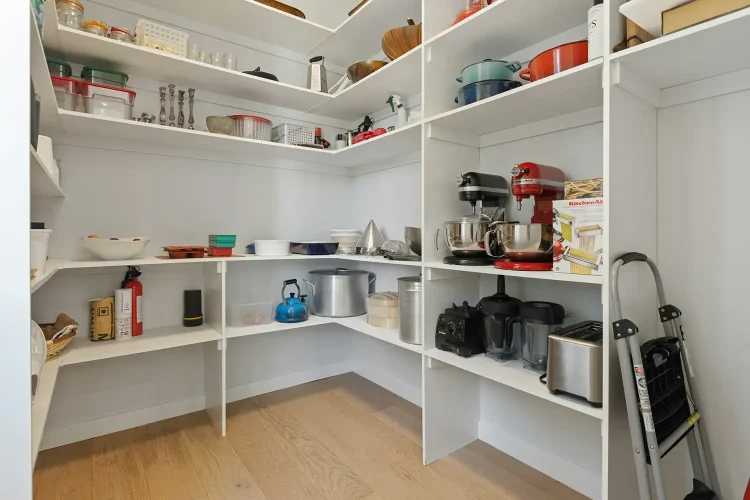
Open shelving has its place in a main kitchen where things are used constantly and look matters. In a scullery, it’s a different story. A scullery is a working utility space. It handles food prep, cleaning, overflow storage, and appliances. Everything in there gets exposed to steam, grease, and cooking residue every time you use the kitchen.
Open shelves in a working scullery get grimy fast. Dishes and glasses sitting on open shelves collect dust and cooking film. Pantry items get sticky. The cleaning required to keep open shelving presentable in a scullery is considerable, and most people find it quickly becomes the least appealing part of the house.
Closed cabinetry solves this entirely. Everything is protected, the space looks clean even when it isn’t, and wiping down a cabinet door takes seconds. If you want the visual openness that shelving provides, consider glass-fronted uppers in a small section rather than open shelves throughout.
Mistake 2: Poor Dishwasher Placement
Placing a dishwasher in the scullery sounds logical. It keeps the noise out of the main kitchen, and it gives the scullery a clear purpose as the cleaning zone. The problem comes down to workflow.
If your dishwasher is in the scullery but your crockery and glassware is stored in the main kitchen, you’ll spend a significant part of every day carrying things back and forth. Unloading becomes a two-room job. It sounds minor until you’re doing it three times a day.
The solution is to think through the full cycle before anything is positioned. Where do dishes come from? Where do they go after they’re clean? If crockery and glassware will live in the scullery, a scullery dishwasher makes perfect sense. If they live in the main kitchen, the dishwasher probably should too. The key is making sure the storage and the appliance end up in the same room.
Mistake 3: Base Cabinets Instead of Drawers
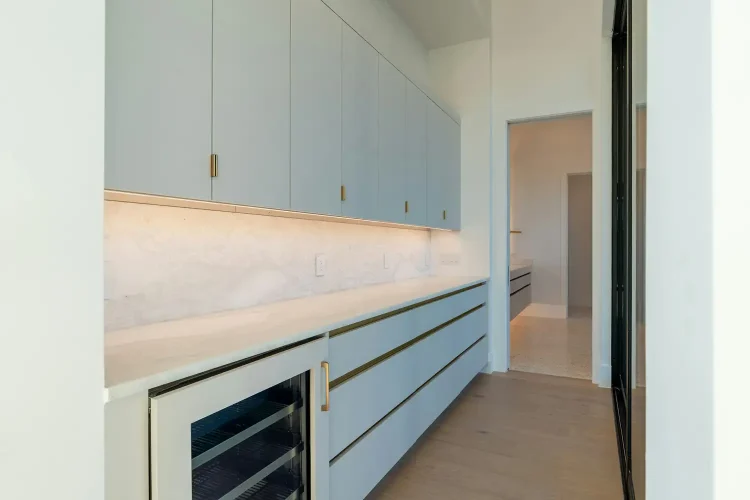 This is the single most common regret in kitchen renovations generally, and it applies just as strongly in a scullery. Base cabinets with shelves look fine on paper and cost less than drawers. In practice, they’re frustrating to use every single day.
Things get pushed to the back and forgotten. Accessing anything stored behind something else means pulling everything out. Heavy items like stand mixers and food processors become awkward to retrieve from a deep shelf. The space technically exists but it isn’t genuinely usable.
Drawers change this completely. Full-extension drawers mean everything is visible and accessible without crouching or reaching. Pull-out systems for pots, pans, and appliances make a scullery genuinely easy to use. The upfront cost is higher, but the daily difference is significant enough that almost everyone who has lived with both will tell you drawers are worth it.
Mistake 4: Trying to Make the Scullery Do Too Many Things
A scullery works best when it has a clear purpose. Where it tends to fail is when it’s asked to be a pantry, a prep kitchen, a craft area, a home office, a laundry overflow, and a second lounge all at once. Without enough space to do any one of those things properly, it ends up doing all of them badly.
The most useful exercise before designing a scullery is deciding what its primary job is. Is it a prep and cleaning zone? A pantry and appliance storage area? A place to hide the mess when people come over? Each of those leads to a different layout, different storage priorities, and different decisions about what goes in and what stays out.
A scullery that does one or two things well is far more valuable than one that attempts everything and delivers none of it comfortably. If you have multiple needs, it’s worth having an honest conversation with your joiner about what the space can realistically accommodate and what might need to be handled elsewhere.
Mistake 5: Designing It Without Reference to the Main Kitchen
A scullery that works in isolation but doesn’t connect properly to the main kitchen creates friction every time you use it. The flow between the two spaces matters more than most people realise when they’re at the planning stage.
Think about how you actually move through your kitchen when you’re cooking, cleaning, and putting things away. Where does the traffic naturally go? Where does the bench prep happen? Where do things land when they come in from the table? The scullery should sit in a position that intercepts that natural movement rather than requiring you to detour around it.
This also applies to the design itself. A scullery that looks and feels disconnected from the main kitchen is a missed opportunity. Matching materials, finishes, and hardware creates a cohesive space and adds to the overall feel of the home. It also tends to work better practically, because the design decisions that made the main kitchen function well are carried through rather than abandoned at the scullery door.
Getting this right is much easier when the kitchen and scullery are designed together from the start rather than one being added to the other as an afterthought.
Plan It Properly Before Anything Gets Built
Most scullery mistakes share a common cause: decisions made about appearance before decisions were made about use. The shelving looks good in a photo. The dishwasher fits in that corner. The base cabinets are cheaper. None of those decisions are wrong in isolation. They become problems when they’re made without thinking through the daily reality of living with them.
A well-designed scullery starts with how you cook, how your household works, and what you actually need the space to do. If you’re planning a new kitchen or thinking about adding a scullery to an existing one, get in touch with Geoff Locke to talk through what would work for your home.
